


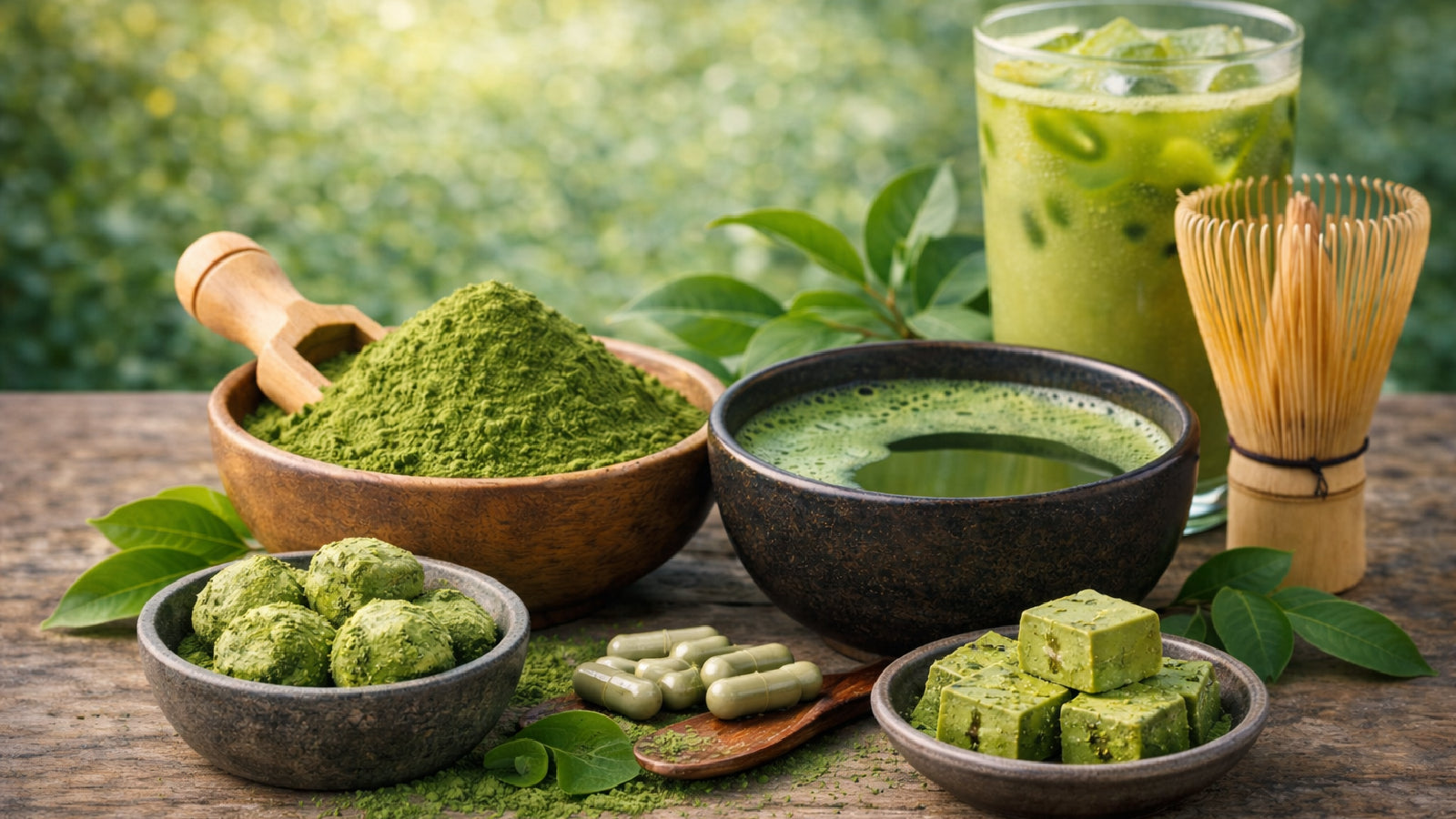
🌿 What is Matcha? Benefits & Uses
Matcha is a type of Japanese green tea that is produced using a unique cultivation and preparation process. The whole tea leaves are ground into a fine powder, making it rich in naturally occurring nutrients
It comes from the same plant as green tea (Camellia sinensis), but the plants are shaded before harvest, giving matcha its distinctive green color and enhancing certain natural compounds
🌿 Nutritional Profile of Matcha
Matcha contains a variety of plant compounds and nutrients, including
Antioxidants
Caffeine
L-theanine
This makes it a popular choice as part of daily beverages
⭐ General Benefits of Matcha
Matcha can be included in a daily routine as part of a balanced lifestyle and may help
Support daily energy levels
Maintain focus and attention
Contribute to a sense of vitality throughout the day
It also contains antioxidants that help protect cells from oxidative stress.
☕ Matcha as a Source of Caffeine
Matcha naturally contains caffeine along with plant compounds such as L-theanine, making it a suitable option for a daily drink
It can be enjoyed as an alternative to coffee or traditional tea, depending on personal preference
⏰ Best Times to Enjoy Matcha
Matcha can be consumed at different times of the day, such as
In the morning
Before daily activities
During work
It is best to avoid consuming it late in the day due to its caffeine content
🥤 How to Prepare Matcha
Matcha can be prepared in several ways, including
Mixing it with water or milk
Using it in hot or cold beverages
Adding it to recipes
It is also available in supplement form
⚠️ Important Notes
Moderate consumption is recommended
Excess caffeine intake may cause discomfort, such as restlessness or difficulty sleeping
Consult a professional if you have a specific health condition
✅ Conclusion
Matcha is a natural ingredient that can be incorporated into a balanced lifestyle, combining a distinctive taste with nutritional value, making it a popular choice for many


